
Introduction
“The thing I was most into in 2025 was Vibe Coding” —— Did you know that Sota Fujii, the Dragon King and Master who stands at the top of the Shogi world, said this?
Fujii Master, known for his AI-utilizing match research, has now challenged himself to tool development using generative AI. He is enthusiastic about a new method where software is developed with AI as the main actor just by giving instructions in natural language like “I want to make this.”
In 2025, the concept of “Vibe Coding” proposed by OpenAI co-founder Andrej Karpathy is causing a quiet revolution in the developer community.
In traditional coding, it was necessary to write every single line of code accurately and understand it in detail. However, in Vibe Coding, you convey your “intent” to the AI and proceed while confirming its “atmosphere (Vibe)” and operation.
What is Vibe Coding? —— A New Era of Manipulating Code with “Intuition”
Shift from Coding to “Conducting”
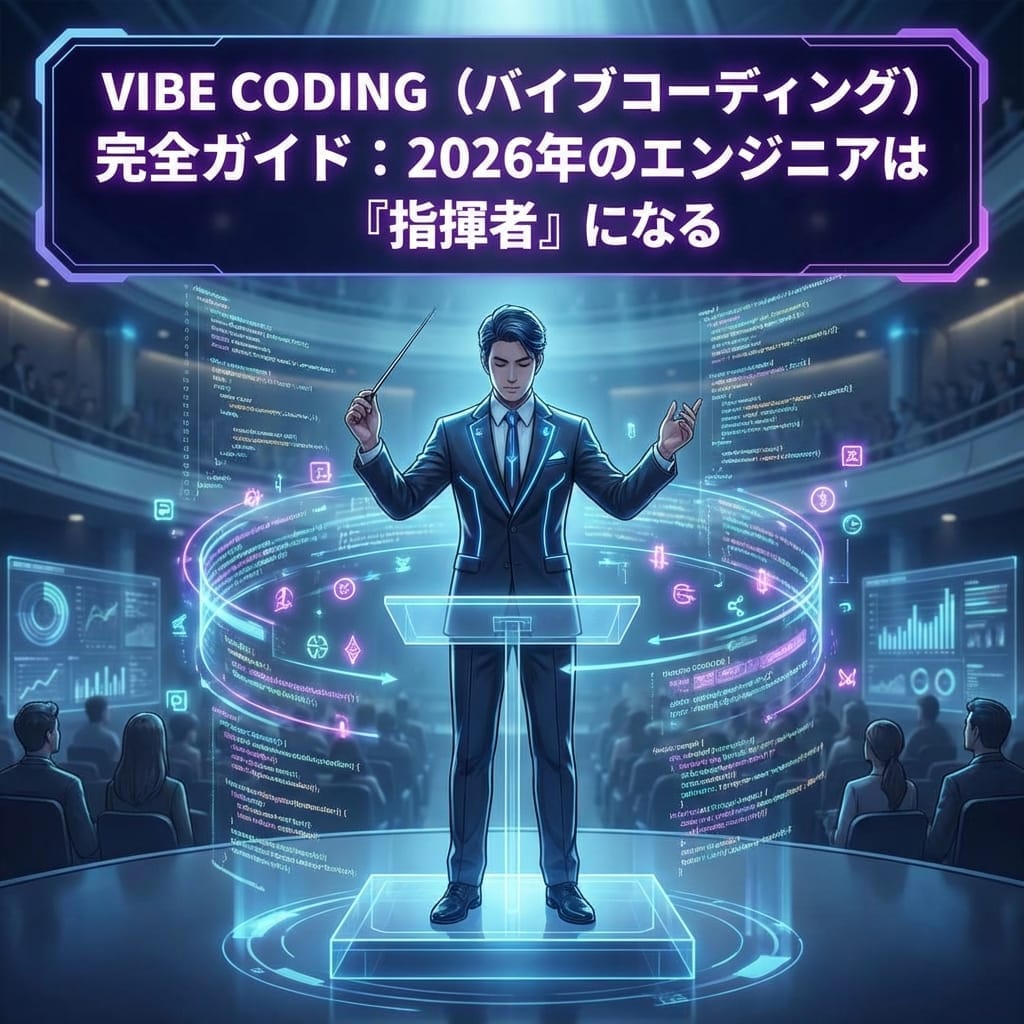
The essence of Vibe Coding lies in the shift of the developer’s role from “Implementer” to “Conductor.”
- Traditional : Focusing on “micro decisions” such as variable names, loop structures, and checking API specifications.
- Vibe Coding : Focusing on defining “What to make” and evaluating “How it feels (Is it as intended?).”
The True Identity of “Vibe” is Compressed Experiential Knowledge
The word “Vibe” might sound unscientific at first glance. However, for a skilled engineer, “Vibe” is “compressed experiential knowledge” cultivated from thousands of hours of coding experience.
Just as a Shogi player intuit his next move the moment he sees the board, an experienced engineer can judge “this implementation is good” or “it seems like it”ll bug out” the moment he sees the code or touches the app.
Difference from “AI Coding”
- Input Completion (Tab-Autocomplete) : Early version of GitHub Copilot. Predicts the next few lines. 2. Chat Assistance : ChatGPT/Claude. Integrated via copy-pasting. An intermediary. 3. Agent-type (Vibe Coding) : Cursor, Windsurf, Replit. Autonomous.
The decisive difference is “where the responsibility lies” and “abandonment of understanding.” In Vibe Coding, “humans do not try to perfectly understand the content of the code and take responsibility only for the operation results.
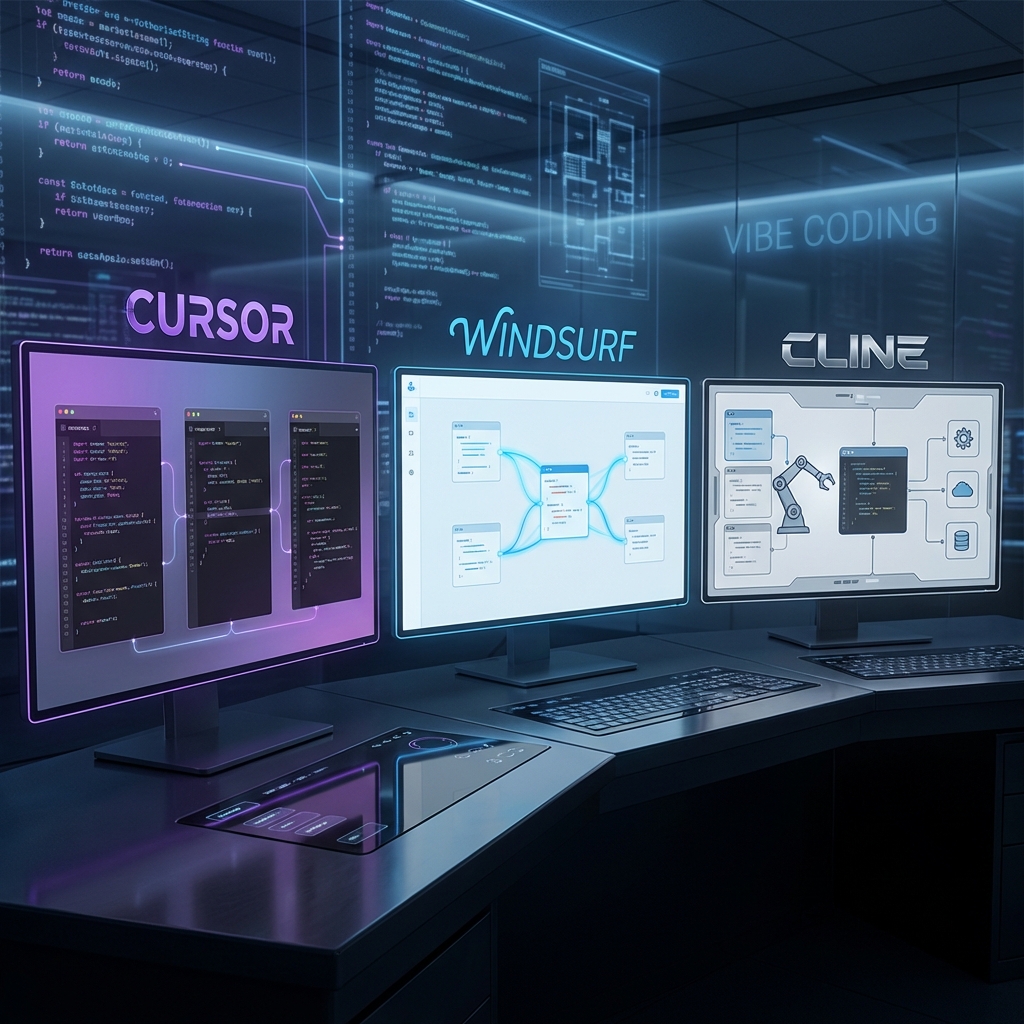
Thorough Comparison of the Big 3 Tools Realizing Vibe Coding
| 項目 | Cursor | Windsurf |
|---|---|---|
| Primary UI | VS Code Based | VS Code Based |
| Key Feature | Composer & Shadow Workspace | Flow & Adaptive Context |
| AI Model | Claude 3.5 / GPT-4o | Claude 3.5 / GPT-4o |
| Target | All Engineers | Engineers focusing on workflows |
Cursor: The Current De Facto Standard
Most widely used based on VS Code. Using the Composer feature (Cmd+I), changes spanning multiple files can be applied all at once. Since Shadow Workspace fixes errors behind the scenes, the flow state is not interrupted.
Windsurf: A Rival Pursuing “Flow”
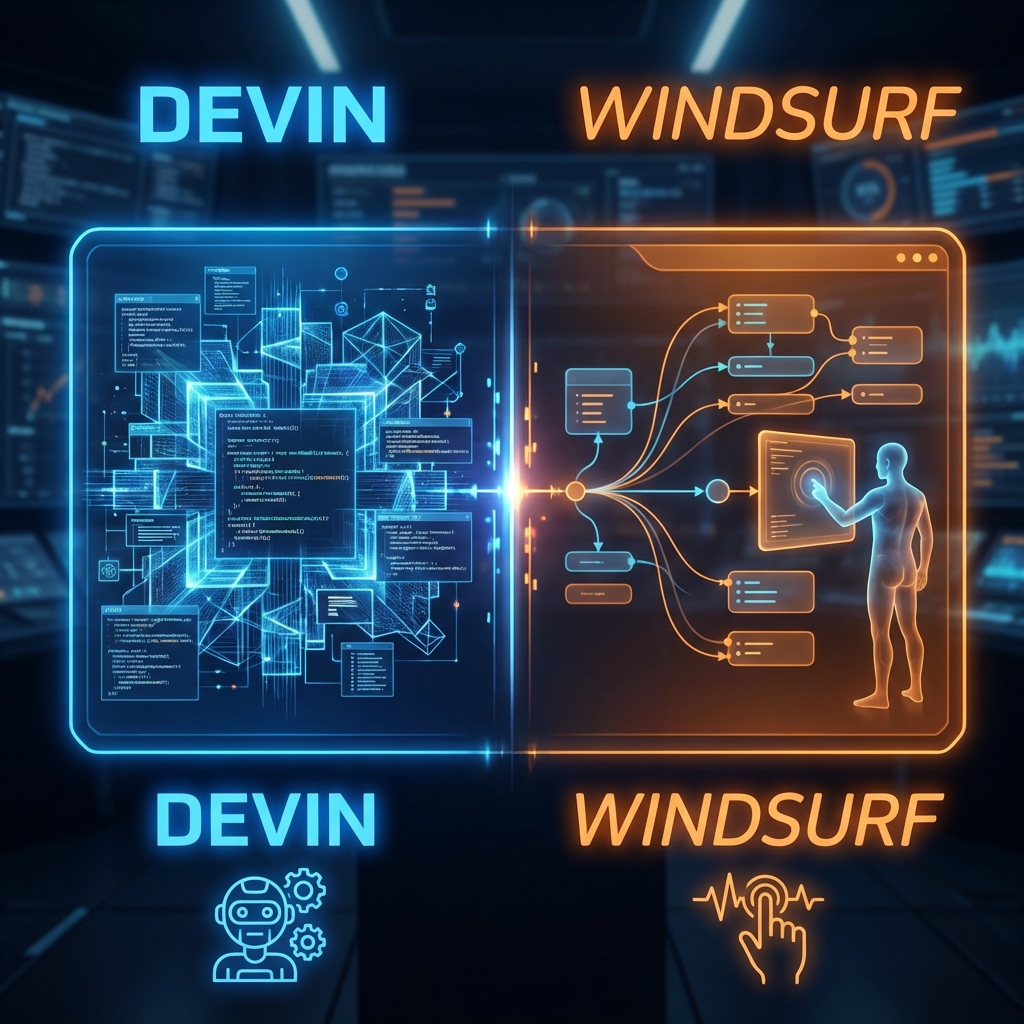
Developed by Codeium. The Cascade feature has deep contextual understanding and grasps dependencies across the entire project. Noteworthy is Memories, which remembers user rules across projects.
Replit Agent: The Ultimate Environment Abstraction
Cloud-native. Replit Agent completes everything up to deployment just with an instruction like “I want to make a To-Do app.” Since no environment setup is required, Vibe Coding is possible even from a smartphone or tablet.
Practical Workflow to Maximize Efficiency
Phase 1: Preparation and Context Engineering
- Definition of Rules : Fix the tech stack and style with
.cursorrulesor.claudemd. - [ ] Specification-Driven Development (SDD) : Don’t let it write code right away; first let it make a specification (Spec file) in Markdown.
Phase 2: Vibe Loop (Generation and Iteration)
- Prompt : Give instructions with a 3-layer structure of technology, requirements, and constraints.
- Generate : Watch the code “vaguely” while it’s being generated.
- Run & Vibe Check : Execute immediately. Sensory evaluation such as “somehow hard to use” or “movements are sluggish” is also important.
- Refine : For errors, throw the logs as they are (Vibe Fix).
Phase 3: Quality Assurance and Security
- + Let AI write test code (Jest/Playwright)
- + Let AI perform security reviews
- + Prototypes are completed at lightning speed
- - Likely to become spaghetti code
- - Risk of vulnerability inclusion (API key leakage, etc.)
- - Concern over skill hollowing out due to loss of understanding
Risks and Measures
- Technical Debt : Regularly set up “refactoring sessions” and let AI clean it up.
- Security : Introduce static analysis tools and secret scans.
- Loss of Understanding : Apply the “50% rule,” use half of your brain for architecture understanding, and let the AI explain.
Future Engineer Persona——From Writer to Director
Vibe Coding is a paradigm shift in the act of programming.
The greatest social significance is giving “the power to build” to everyone with ideas. The wall of programming languages disappears, and innovation by non-engineers accelerates.

It will shift from “the power to write correct syntax” to “the power to converse with AI, convey correct intent, and judge the goodness or badness of the output with intuition (Vibe).” It’s an evolution from “description” to “conducting.”
Why not start Vibe Coding? You might feel uneasy at first about proceeding without reading the code, but once you entrust yourself to those “vibes,” a new horizon should come into view.

⚠️ コメントのルール
※違反コメントはAIおよび管理者により予告なく削除されます
まだコメントがありません。最初のコメントを投稿しましょう!